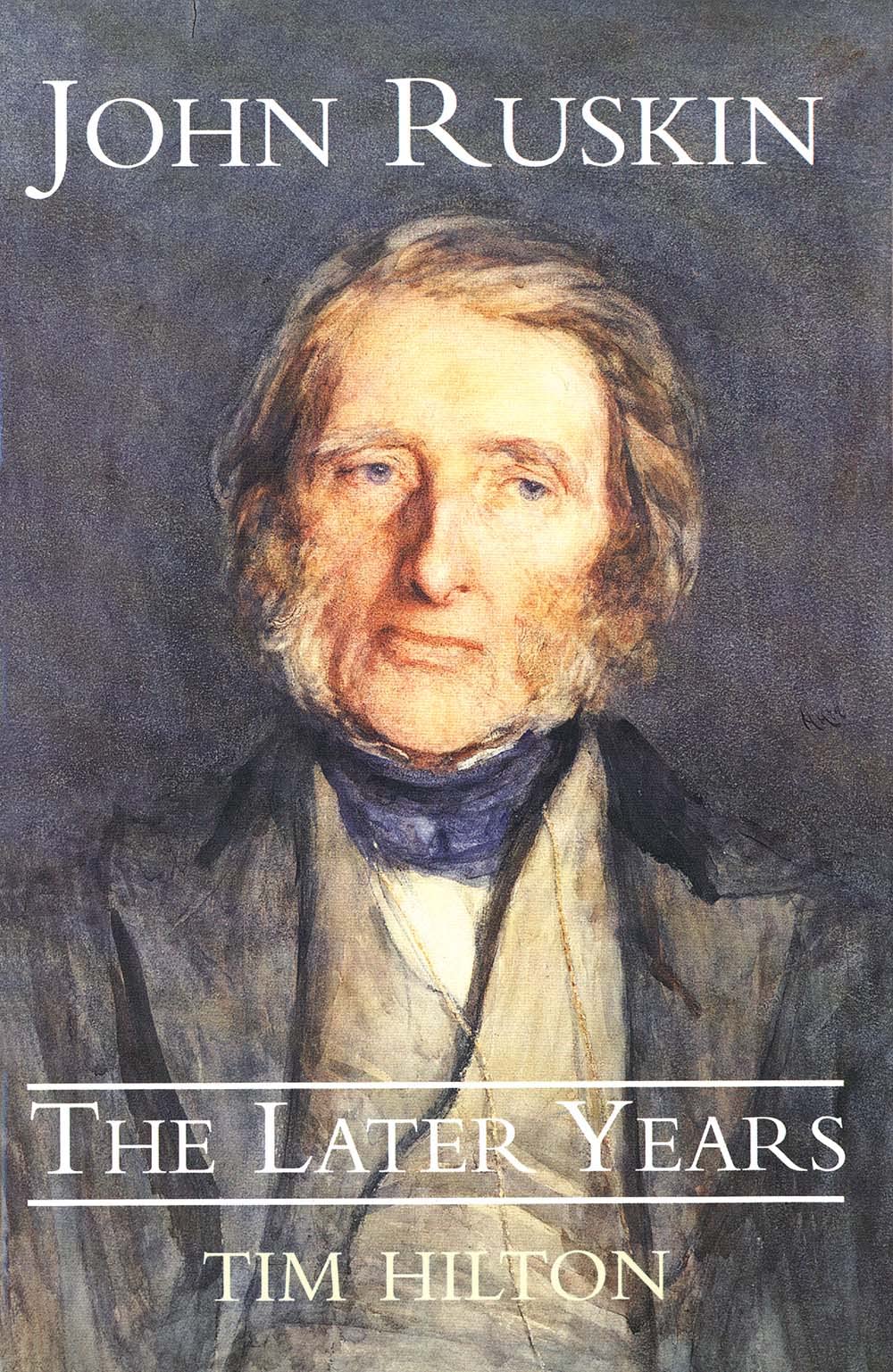
John Ruskin: The Later Years
$27.13
| Brand | Tim Hilton |
| Merchant | Amazon |
| Category | Books |
| Availability | In Stock Scarce |
| SKU | 0300083114 |
| Age Group | ADULT |
| Condition | NEW |
| Gender | UNISEX |
About this item
John Ruskin: The Later Years
Selected by New York Times Book Review as a Best Book Since 2000 “The finest and fairest life of Ruskin that has yet been written. . . . To every phase of Ruskin’s highly variegated literary oeuvre Mr. Hilton brings a judicious and informed critical intelligence. It has taken 100 years, but in Tim Hilton, Ruskin has found the champion he deserves.”—Hilton Kramer, Wall Street Journal John Ruskin, one of the greatest writers and thinkers of the nineteenth century, was also one of the most prolific. Not only did he publish some 250 works, but he also wrote lectures, diaries, and thousands of letters that have not been published. This book—the second and final volume of Tim Hilton’s acclaimed biography of Ruskin, which is published on the centenary of Ruskin’s death—draws on the original source material to give a moving account of the life of this brilliant and creative man. The book begins in 1859, when Ruskin, a famous author with a disastrous marriage behind him, is living with his parents, writing and traveling, and tutoring—among other pupils—Rose La Touche, a girl of ten, with whom he slowly falls in love. Hilton recounts how this relationship developed into one of the saddest love affairs of literary history, ending in tragedy in 1875. Thereafter, says Hilton, Ruskin’s life was punctuated by bouts of insanity and despair that culminated in total breakdown for the last ten years of his life. During these years, however, his intellect and imagination reached new heights, as he produced Praeterita and most of Fors Clavigera, the series of monthly letters to British workers. Hilton’s magisterial narrative follows Ruskin through this period and shows that he was the most eloquent and radical of all the great Victorian writers. Beginning in 1859, the second volume of Tim Hilton's sterling biography of John Ruskin chronicles much suffering and sadness, as well as spiritual and artistic growth. The deaths of his beloved parents, in 1864 and 1871, snapped Ruskin out of self-indulgence and a tendency to complain. His love for Rose La Touche, only 9 years old when he met her in 1858 and appalled when he declared his feelings in 1866, would last throughout this morbidly pious girl's lingering illness and beyond her death in 1875. He had bouts of mental illness that finally incapacitated him in the decade before his death in 1900. Yet these were also the years in which Ruskin wrote his fascinating autobiography, Praeterita , and the innovative Fors Clavigera . Hilton believes this series of 96 pamphlets addressed to British workers to be Ruskin's masterpiece, a revelation of "the continuing life of the mind" as their author ranged from Dante to the English Poor Laws to the iconography of the penny. Hilton discusses these and the underlying themes of Ruskin's life with remarkable clarity and an impressive range of knowledge. He enables modern readers to decipher the idiosyncratic thoughts and feelings of a great Victorian who was "a glory of the nation's literature, and an important part of its social conscience." --Wendy Smith This new work by Hilton, a regular contributor to the Times Literary Supplement, picks up in 1859 where his highly praised John Ruskin: The Early Years left off. At that time, Ruskin was finishing his five-volume Modern Painters, still recovering from a failed marriage, and starting to teach ten-year-old Rose La Touche. By his early 40s, Ruskin had earned a reputation as a writer and most notably a famed and feared art critic. But soon he became a strident activist for social reform whose essays, though stinging, petulant, and sarcastic, brought forth the ideas of national education, organized labor, old-age pensions, homes for the working classes, and organized street cleaners. When La Touche refused to marry him for religious reasons and soon died, there began a series of bouts with "brain fever" that eventually led to periods of seclusion and madness. Still, Ruskin was the first to head up a professorship of fine arts at Oxford. Hilton's research, years of reading Ruskin, and attention to detail make this biography very personal and readableDand probably the definitive account on Ruskin. A necessary companion to Susan P. Casteras and others' John Ruskin and the Victorian Eye (LJ 4/1/93), Hilton's two-volume set is recommended for English literature and art collections at academic and larger public libraries.DJoseph Hewgley, Nashville P.L. Copyright 2000 Reed Business Information, Inc. "As stupendous in research and intelligence as volume one." -- Globe and Mail "The model biography of a cultural figure. . . . a triumphant telling of one of the saddest stories ever told." -- Dave Hickey, Art Forum ...a captivating story of the great Victorian aesthete's slow drag into grand private despairs, ranting public dyspepsias and final madness. -- The New York Times Book Review , Valentine Cunningham Far and away the best biography of Ruskin [a] deeply felt and often s
| Brand | Tim Hilton |
| Merchant | Amazon |
| Category | Books |
| Availability | In Stock Scarce |
| SKU | 0300083114 |
| Age Group | ADULT |
| Condition | NEW |
| Gender | UNISEX |
Similar Products

![Last of the Great Scouts: The Life Story of William F. Cody ["Buffalo Bill"]](https://m.media-amazon.com/images/I/61MxDF8lRnL.jpg)


Compare with similar items
Firm Foundation: 49 Days of Walking with... |
Batik art, 'Business as Usual'... |

Lille France Travel Guide: Explore Top A... |
Picture Book of Bible Verses: A Christia... |
|
|---|---|---|---|---|
| Price | $5.99 | $184.99 | $22.99 | $12.99 |
| Brand | ANDREW BRELAND | NOVICA | Louis Duchamp | Marilyn Dennel |
| Merchant | Amazon | Novica | Amazon | Amazon |
| Availability | In Stock | In Stock | In Stock | In Stock |