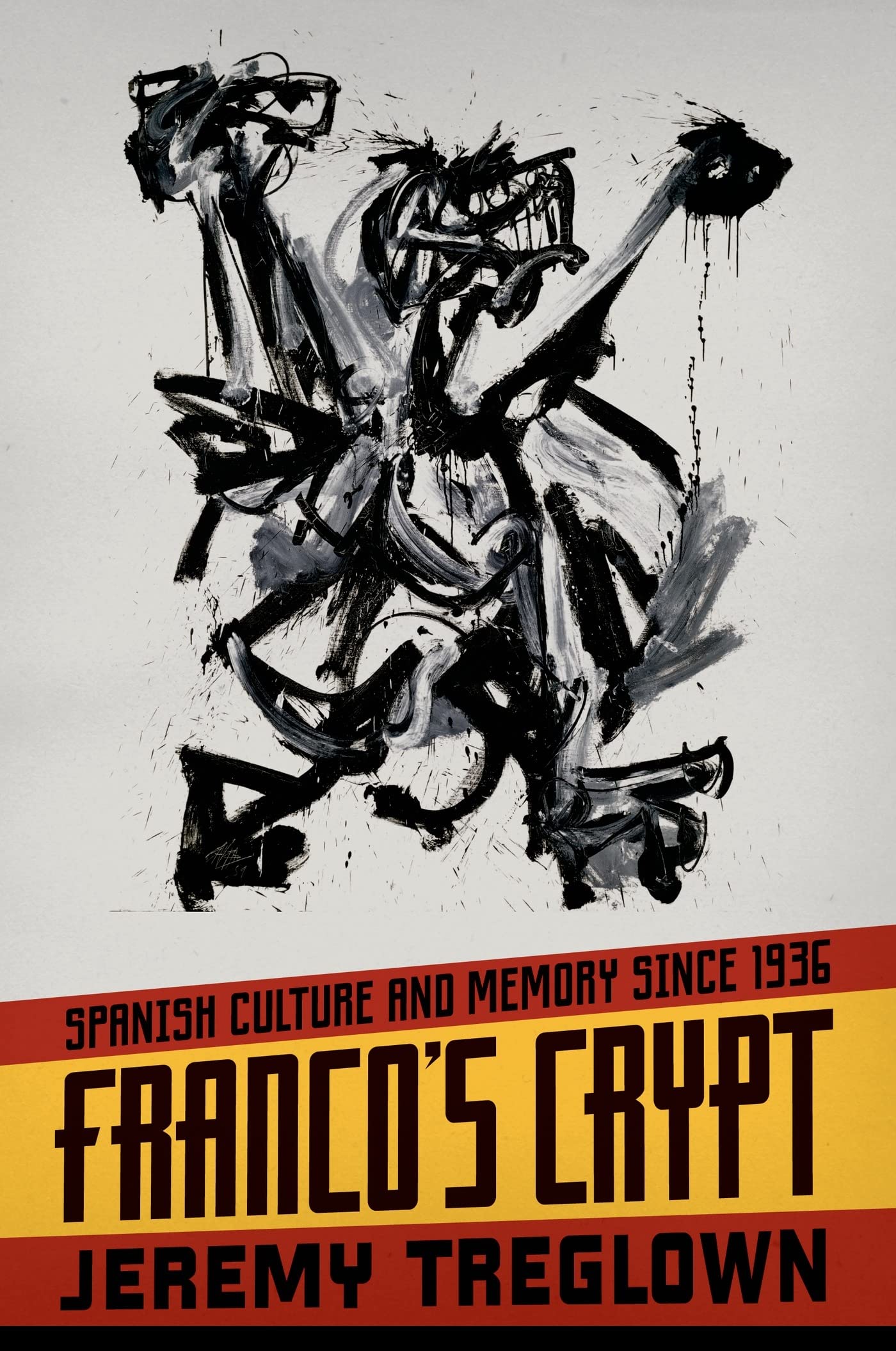
Franco's Crypt: Spanish Culture and Memory Since 1936
$35.47
| Brand | Jeremy Treglown |
| Merchant | Amazon |
| Category | Books |
| Availability | In Stock Scarce |
| SKU | 0374108420 |
| Age Group | ADULT |
| Condition | NEW |
| Gender | UNISEX |
About this item
Franco's Crypt: Spanish Culture and Memory Since 1936
An open-minded and clear-eyed reexamination of the cultural artifacts of Franco's fascist Spain True, false, or both? Spain's 1939-75 dictator, Francisco Franco, was a pioneer of water conservation and sustainable energy. Pedro Almodóvar is only the most recent in a line of great antiestablishment film directors who have worked continuously in Spain since the 1930s. As early as 1943, former Republicans and Nationalists were collaborating in Spain to promote the visual arts, irrespective of the artists' political views. Censorship can benefit literature. Memory is not the same thing as history. Inside Spain as well as outside, many believe-wrongly-that under Franco's fascist dictatorship, nothing truthful or imaginatively worthwhile could be said or written or shown. In his groundbreaking new book, Franco's Crypt: Spanish Culture and Memory Since 1936 , Jeremy Treglown argues that oversimplifications like these of a complicated, ambiguous actuality have contributed to a separate falsehood: that there was and continues to be a national pact to forget the evils for which Franco's side (and, according to this version, his side alone) was responsible. The myth that truthfulness was impossible inside Franco's Spain may explain why foreign narratives ( For Whom the Bell Tolls , Homage to Catalonia ) have seemed more credible than Spanish ones. Yet La Guerra de España was, as its Spanish name asserts, Spain's own war, and in recent years the country has begun to make a more public attempt to "reclaim" its modern history of fascism. How it is doing so, and the role played in the process by notions of historical memory, are among the subjects of this wide-ranging and challenging book. Franco's Crypt reveals that despite state censorship, events of the time were vividly recorded. Treglown looks at what's actually there-monuments, paintings, public works, novels, movies, video games-and considers, in a captivating narrative, the totality of what it shows. The result is a much-needed reexamination of a history we only thought we knew. Literary scholar Treglown, author of acclaimed biographies of Roald Dahl, Henry Green, and V. S. Pritchett, here offers a thoughtful, erudite hand grenade of a book that takes issue with contemporary narratives about Spanish cultural life during the Franco dictatorship (1939–75). Examining various works of fiction, journalism, and art, as well as public controversies about museums, graveyards, and other centers of historical gravity, Treglown argues that our understanding of culture under Franco has (ironically) been muddied by efforts to cultivate cultural memory of the period. Such efforts have, he suggests, been weakened by “sentimental politicization, escapism, complacency, and ignorance” as well as the general unreliability of memory, and the result is (again, ironically) both a persistent cultural amnesia and an unhealthy fixation on the past. Whether or not they share his concerns about cultural memory, readers interested in postwar Spanish art, literature, or politics will appreciate and likely learn from Treglown’s deep knowledge of these subjects. --Brendan Driscoll “A discerning, provocative book, part travelogue, part reflection on how memory passes into history, and part cultural narrative, Franco's Crypt establishes that much more was going on during Franco's regime than is usually credited. Touching on prickly issues with the pragmatic detachment of a foreigner, Mr. Treglown shows that subversive elements were at play in art, literature and cinema, and that a cautious yet irreversible process of modernity had begun long before Franco's death . . . Franco's Crypt [is] an unflinching addition to the literature on contemporary Spanish history and a cautionary tale about the nature of the beasts invoked by the political manipulation of bad memories. It also serves as a thought-provoking study on artistic expression under authoritarian regimes.” ― Valerie Miles, The New York Times “ Franco's Crypt . . . provides by far the best, and most objective, brief introduction to Spain's memory wars to be found in any language . . . Mr. Treglown offers a stimulating new reading of the chief milestones of Spanish culture since 1939. In doing so, he highlights the vitality of the country's artistic activity under Franco, subjecting the standard leftist narrative of a culturally stale Francoist Spain to sharp contradiction.” ― Stanley Payne, The Wall Street Journal “[Treglown] brilliantly captures the ways that circumstances affect writers' lives and work in accounts of his own visits to gravesites, in his stories of monuments and archives, and in profiles of novelists, historians, filmmakers, and architects grappling with an autocratic regime . . . Behind the lines, Treglown observes, many artists and writers refused both to act as propagandists or to be silenced. This is where his book is especially powerful. His inquiries into the Spanish past recover experiences and efforts th
| Brand | Jeremy Treglown |
| Merchant | Amazon |
| Category | Books |
| Availability | In Stock Scarce |
| SKU | 0374108420 |
| Age Group | ADULT |
| Condition | NEW |
| Gender | UNISEX |
Similar Products






Compare with similar items
Two Cats,'Cat-themed Blue Decoupage Book... |

DOG PAIN RELIEF ANTI- INFLAMMATORY COOKB... |
El pan nuestro de cada día - libro de or... |

Fierce & Faithful: Women of Prayer: Blac... |
|
|---|---|---|---|---|
| Price | $14.99 | $11.99 | $5.25 | $9.99 |
| Brand | NOVICA | Jessica C. James | P. Claudio Muniz sdb | Color Script Studios |
| Merchant | Novica | Amazon | Amazon | Amazon |
| Availability | In Stock | In Stock | In Stock | In Stock |