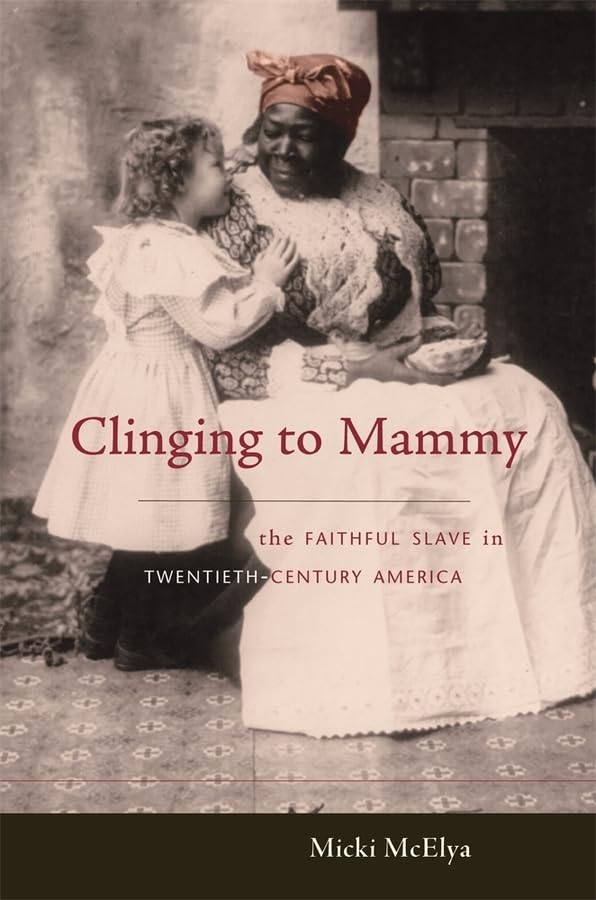
Clinging to Mammy: The Faithful Slave in Twentieth-Century America
$42.00
| Brand | Micki McElya |
| Merchant | Amazon |
| Category | Books |
| Availability | In Stock Scarce |
| SKU | 0674024338 |
| Age Group | ADULT |
| Condition | NEW |
| Gender | UNISEX |
| Google Product Category | Media > Books |
| Product Type | Books > Subjects > Politics & Social Sciences > Social Sciences > Cultural & Ethnic Studies > African Descent & Black > African American Studies |
About this item
Clinging to Mammy: The Faithful Slave in Twentieth-Century America
When Aunt Jemima beamed at Americans from the pancake mix box on grocery shelves, many felt reassured by her broad smile that she and her product were dependable. She was everyone's mammy, the faithful slave who was content to cook and care for whites, no matter how grueling the labor, because she loved them. This far-reaching image of the nurturing black mother exercises a tenacious hold on the American imagination. Micki McElya examines why we cling to mammy. She argues that the figure of the loyal slave has played a powerful role in modern American politics and culture. Loving, hating, pitying, or pining for mammy became a way for Americans to make sense of shifting economic, social, and racial realities. Assertions of black people's contentment with servitude alleviated white fears while reinforcing racial hierarchy. African American resistance to this notion was varied but often placed new constraints on black women. McElya's stories of faithful slaves expose the power and reach of the myth, not only in popular advertising, films, and literature about the South, but also in national monument proposals, child custody cases, white women's minstrelsy, New Negro activism, anti-lynching campaigns, and the civil rights movement. The color line and the vision of interracial motherly affection that helped maintain it have persisted into the twenty-first century. If we are to reckon with the continuing legacy of slavery in the United States, McElya argues, we must confront the depths of our desire for mammy and recognize its full racial implications. “Few American icons have been as comforting or as destructive as the black mammy. If lynching was the brutal face of white supremacy, Aunt Jemima and her ilk were the face of the white fantasy of harmonious race relations. With exceptional scholarly craft, McElya reveals the distortions, hardships, and tragedy that the smiling face and jovial demeanor of the mythic black mammy were intended to obscure. This book signals the arrival of a talented new historian.” ― W. Fitzhugh Brundage, author of The Southern Past: A Clash of Race and Memory “Americans loved Aunt Jemima and their mammies. There is no more powerful and damaging popular symbol in American culture than the faithful slave in all its manifestations. McElya's sensitive, surprising, and enlightening book will make readers wonder at how desperate white America was to believe that slaves were loyal and content. This book is painfully marvelous scholarship that should reach a broad readership.” ― David Blight, author of Race and Reunion: The Civil War in American Memory “McElya's powerful blend of cultural and political history illuminates the ways twentieth-century white Southerners tried to maintain their historic privilege while denying the violence of their past. Following the trajectory from Aunt Jemima to Ronald Reagan's "welfare queen," Clinging to Mammy traces white Americans' efforts to define, coerce and reap the benefits of African American women's labor while maintaining a firm grip on political power.” ― Jane Dailey, author of Before Jim Crow: The Politics of Race in Postemancipation Virginia “McElya shows vividly how "mammy" serves as a perfect archetype for analyzing cultural politics of race and gender, and how they changed. She gives us parlor theatrics, courtroom drama, legislative debate, and movement politics. This is a wonderfully expansive book.” ― Scott A Sandage, author of Born Losers: A History of Failure in America “Details the tenacious hold of the “mammy” myth of contented colored folk on white public imagination.” ― Multidiversity: Myers Book Commentary “If you want to understand the ways that white women exploited black women’s domestic labor and how Hollywood and Madison Avenue went on to make billions marketing that exploitation, this is the text to read. McElya’s book clarifies why we should not expect simple or enduring political alliances based on gender unless and until we have some very serious, difficult, and sustained conversations around class and race.” ― Melissa Harris-Perry , Elle Micki McElya is Professor of History at the University of Connecticut. She is the author of Clinging to Mammy: The Faithful Slave in Twentieth-Century America and of The Politics of Mourning: Death and Honor in Arlington National Cemetery , which won the John Brinckerhoff Jackson Book Prize and the Sharon Harris Award and was a finalist for the Jefferson Davis Award and the Pulitzer Prize. New Mint Condition Dispatch same day for order received before 12 noon Guaranteed packaging No quibbles returns
| Brand | Micki McElya |
| Merchant | Amazon |
| Category | Books |
| Availability | In Stock Scarce |
| SKU | 0674024338 |
| Age Group | ADULT |
| Condition | NEW |
| Gender | UNISEX |
| Google Product Category | Media > Books |
| Product Type | Books > Subjects > Politics & Social Sciences > Social Sciences > Cultural & Ethnic Studies > African Descent & Black > African American Studies |
Similar Products








Compare with similar items

nourishing puree cookbook for beginners:... |

OFFSEC BLACK BOOK-The Practical Guide to... |

Spring Cleaning Coloring Book Kawaii Col... |

When I'm Gone (Unwell Series)... |
|
|---|---|---|---|---|
| Price | $15.99 | $20.00 | $6.99 | $17.99 |
| Brand | phoebe maisie | Juan Limon | Chantal van Laere | Autumn Hendrix |
| Merchant | Amazon | Amazon | Amazon | Amazon |
| Availability | In Stock | In Stock | In Stock | In Stock |