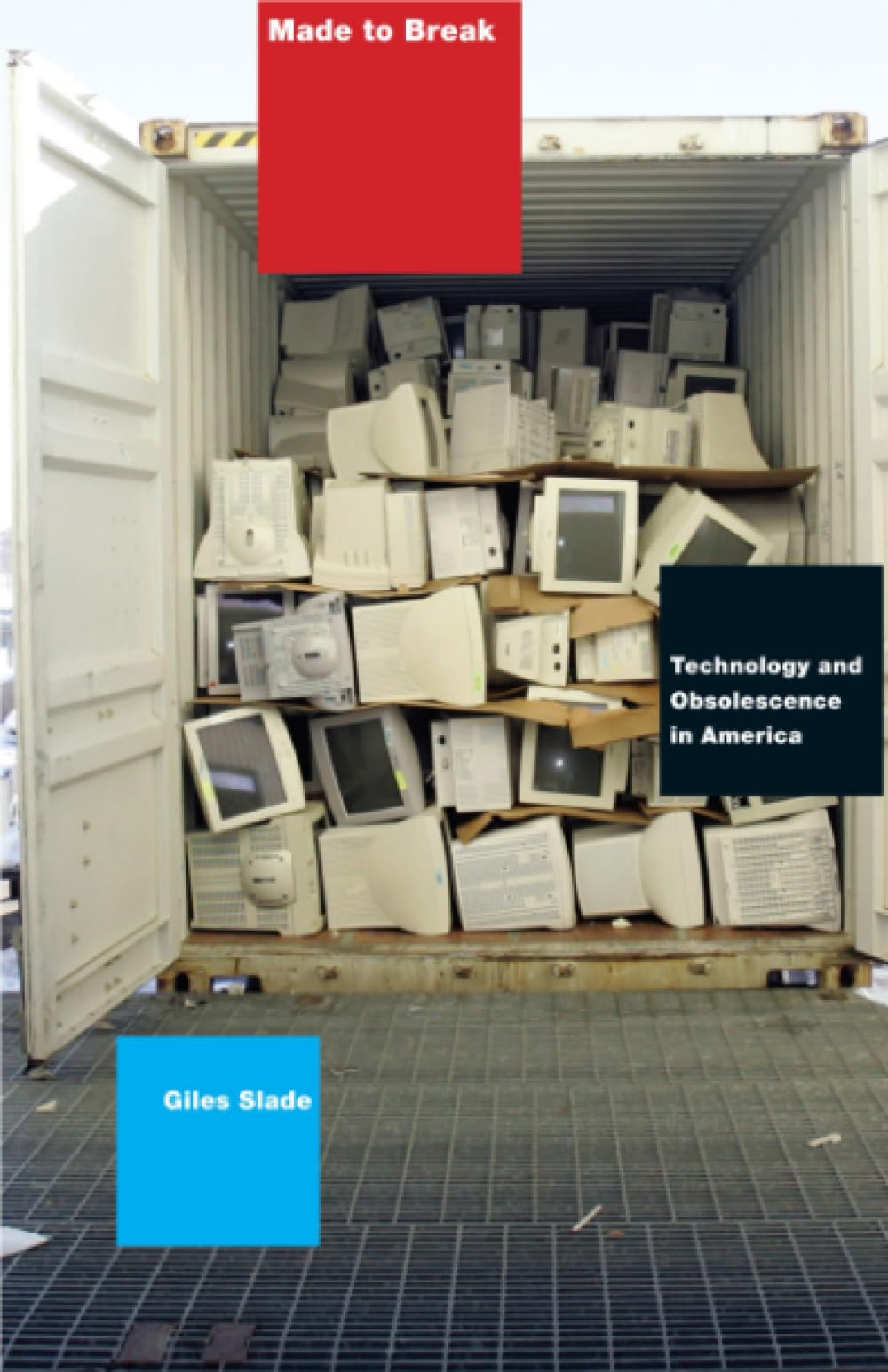
Made to Break: Technology and Obsolescence in America
$32.00
| Brand | Giles Slade |
| Merchant | Amazon |
| Category | Books |
| Availability | In Stock |
| SKU | 0674025725 |
| Age Group | ADULT |
| Condition | NEW |
| Gender | UNISEX |
| Google Product Category | Media > Books |
| Product Type | Books > Subjects > Engineering & Transportation > Engineering > Reference > History |
About this item
Made to Break: Technology and Obsolescence in America
Listen to a short interview with Giles SladeHost: Chris Gondek | Producer: Heron & Crane If you've replaced a computer lately--or a cell phone, a camera, a television--chances are, the old one still worked. And chances are even greater that the latest model won't last as long as the one it replaced. Welcome to the world of planned obsolescence--a business model, a way of life, and a uniquely American invention that this eye-opening book explores from its beginnings to its perilous implications for the very near future. Made to Break is a history of twentieth-century technology as seen through the prism of obsolescence. America invented everything that is now disposable, Giles Slade tells us, and he explains how disposability was in fact a necessary condition for America's rejection of tradition and our acceptance of change and impermanence. His book shows us the ideas behind obsolescence at work in such American milestones as the inventions of branding, packaging, and advertising; the contest for market dominance between GM and Ford; the struggle for a national communications network, the development of electronic technologies--and with it the avalanche of electronic consumer waste that will overwhelm America's landfills and poison its water within the coming decade. History reserves a privileged place for those societies that built things to last--forever, if possible. What place will it hold for a society addicted to consumption--a whole culture made to break? This book gives us a detailed and harrowing picture of how, by choosing to support ever-shorter product lives we may well be shortening the future of our way of life as well. “The flip side of America's worship of novelty is its addiction to waste, a linkage illuminated in this fascinating historical study. Historian Slade surveys the development of disposability as a consumer convenience, design feature, economic stimulus and social problem, from General Motors' 1923 introduction of annual model changes that prodded consumers to trade in perfectly good cars for more stylish updates, to the modern cell-phone industry, where fashion-driven "psychological obsolescence" compounds warp-speed technological obsolescence to dramatically reduce product life-cycles. He also explores the debate over "planned obsolescence" decried by social critics as an unethical affront to values of thrift and craftsmanship, but defended as a Darwinian spur to innovation by business intellectuals who further argued that "wearing things out does not produce prosperity, but buying things does." Slade's even-handed analysis acknowledges both manufacturers' manipulative marketing ploys and consumers' ingrained love of the new as motors of obsolescence, which he considers an inescapable feature of a society so focused on progress and change...Slade's lively, insightful look at a pervasive aspect of America's economy and culture make this book a keeper.” ― Publisher's Weekly “Slade's fresh and thought-provoking analysis of conspicuous consumption and its unintended environmental consequences closes with a clarion call for combating e-waste.” ― Donna Seaman , Booklist “Each year consumers replace old but still-functioning cell phones, televisions, computers, and other electronic items with newer, sleeker models. The discarded items end up in landfills, where they slowly leach their toxic components. Slade examines how obsolenscence became a way of life in the United States.” ― Science News “A primer for the techno-curious, Giles Slade's Made to Break: Technology and Obsolescence in America outlines the rapid growth of our waste culture beginning with 19th-century paper shirt collars and safety razors. As Americans grew nonchalant about throwing away common items, manufacturers developed advertising practices convincing consumers that larger belongings (like cars), too, had shelf lives, justifying the "throwaway ethic" that pervades modern society...Slade keeps the topic of technological obsolescence interesting with engrossing factoids and anecdotes while sounding an alarm for the e-obsessed.” ― Stacy Klein , Playboy “Giles Slade traces the roots of our love affair with 'repetitive buying' in a new book, Made to Break: Technology and Obsolescence in America . It's an eye-opening look at corporate greed and at the statistics of American consumerism.” ― Faye B. Zuckerman , Providence Journal “[A] troubling and important book: At least 90 percent of the 315 million still-functional personal computers discarded in North America in 2004 were trashed, and more than 100 million cell phones--200,000 tons' worth--were thrown away in 2005. Things are likely to get much worse in the near future, and this assessment frames Slade's engaging examination of the various kinds of obsolescence that contribute to the problem.” ― San Francisco Chronicle “ Made to Break: Technology and Obsolescence in America is a fascinating, vexing, even enraging history of our "throw-away et
| Brand | Giles Slade |
| Merchant | Amazon |
| Category | Books |
| Availability | In Stock |
| SKU | 0674025725 |
| Age Group | ADULT |
| Condition | NEW |
| Gender | UNISEX |
| Google Product Category | Media > Books |
| Product Type | Books > Subjects > Engineering & Transportation > Engineering > Reference > History |
Similar Products









Compare with similar items

Write the Vision Composition Journal Not... |

ABC: My First Alphabet Book... |

Build Muscle Get Lean: The Only Two Rule... |
Moneytopia: Earning: Financial Literacy ... |
|
|---|---|---|---|---|
| Price | $13.99 | $12.00 | $19.99 | $11.99 |
| Brand | 525 Design Co | Laura Maftei | Romeo Jeremiah Clayton | Dr. Shanshan Peer MBA |
| Merchant | Amazon | Amazon | Amazon | Amazon |
| Availability | In Stock | In Stock | In Stock | In Stock |