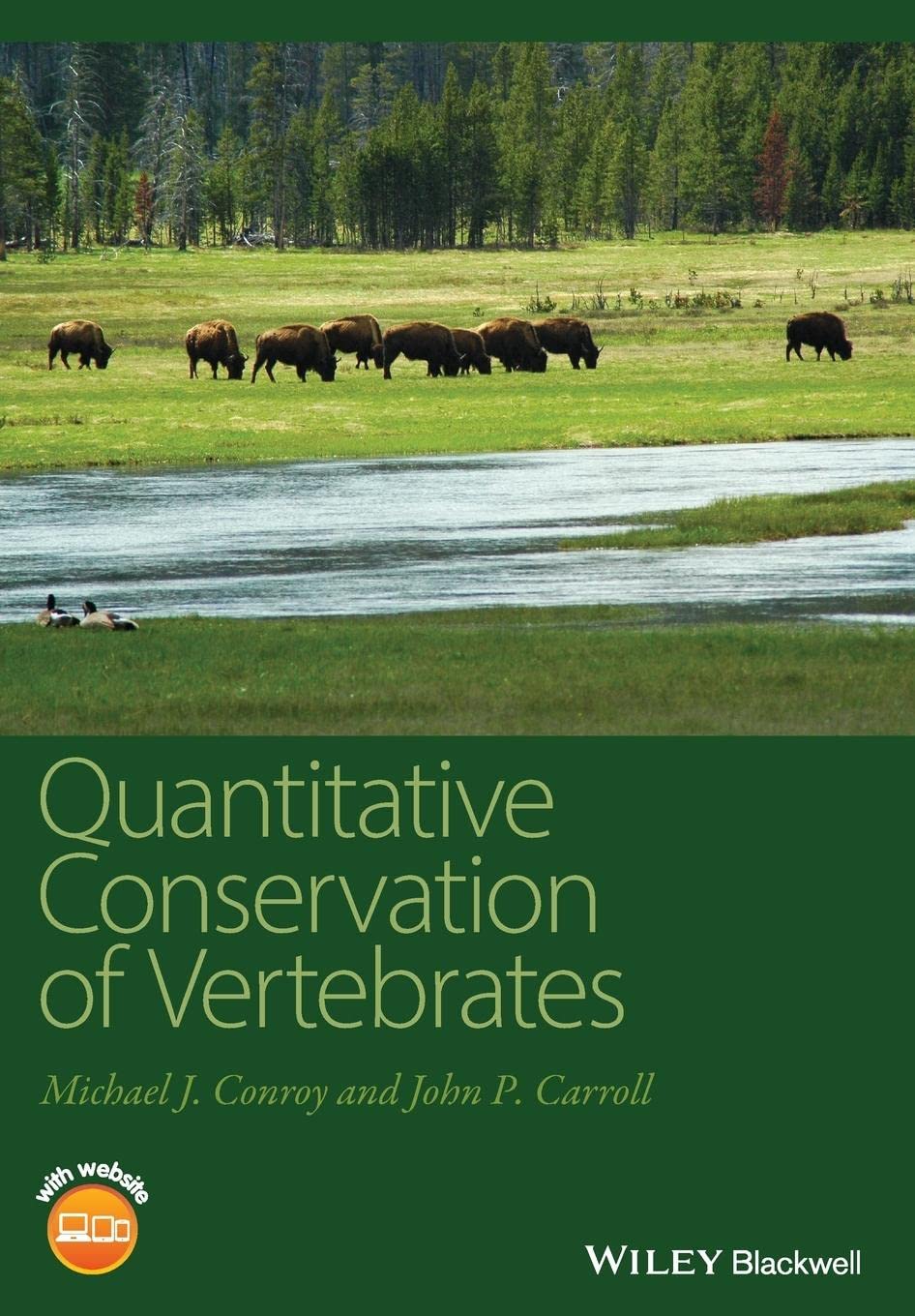
Quantitative Conservation of Vertebrates
$77.63
| Brand | Michael J. Conroy |
| Merchant | Amazon |
| Category | Books |
| Availability | In Stock Scarce |
| SKU | 1405182288 |
| Age Group | ADULT |
| Condition | NEW |
| Gender | UNISEX |
| Google Product Category | Media > Books |
| Product Type | Books > Subjects > Science & Math > Biological Sciences > Ecology |
About this item
Quantitative Conservation of Vertebrates
This book provides a hands-on introduction to the construction and application of models to studies of vertebrate distribution, abundance, and habitat. The book is aimed at field biologists, conservation planners, and advanced undergraduate and postgraduate students who are involved with planning and analyzing conservation studies, and applying the results to conservation decisions. The book also acts as a bridge to more advanced and mathematically challenging coverage in the wider literature. Part I provides a basic background in population and community modeling. It introduces statistical models, and familiarizes the reader with important concepts in the design of monitoring and research programs. These programs provide the essential data that guide conservation decision making. Part II covers the principal methods used to estimate abundance, occupancy, demographic parameters, and community parameters, including occupancy sampling, sample counts, distance sampling, and capture-mark-recapture (for both closed and open populations). Emphasis is placed on practical aspects of designing and implementing field studies, and the proper analysis of data. Part III introduces structured decision making and adaptive management, in which predictive models are used to inform conservation decision makers on appropriate decisions in the face of uncertainty―with the goal of reducing uncertainty through monitoring and research. A detailed case study is used to illustrate each of these themes. Numerous worked examples and accompanying electronic material (on a website - http://www.blackwellpublishing.com/conroy - and accompanying CD) provide the details of model construction and application, and data analysis. "Overall, this would be a plausible book for an upper-division course in which students would learn, rather painlessly, the necessary combination of observation and mathematics necessary to make important conservation decisions." ( CHOICE , December 2009) This book provides a hands-on introduction to the construction and application of models to studies of vertebrate distribution, abundance, and habitat. The book is aimed at ??? eld biologists, conservation planners, and advanced undergraduate and postgraduate students who are involved with planning and analyzing conservation studies, and applying the results to conservation decisions. The book also acts as a bridge to more advanced and mathematically challenging coverage in the scienti??? c literature. Part I provides a basic background in population and community modeling. It introduces statistical models, and familiarizes the reader with important concepts in the design of monitoring and research programs. These programs provide the essential data that guide conservation decision making. Part II covers the principal methods used to estimate abundance, occupancy, demographic parameters, and community parameters, including occupancy sampling, sample counts, distance sampling, and capture- mark-recapture (for both closed and open populations). Emphasis is placed on practical aspects of designing and implementing ??? eld studies, and the proper analysis of data. Part III introduces structured decision making and adaptive management, in which predictive models are used to inform conservation decision makers on appropriate decisions in the face of uncertainty with the goal of reducing uncertainty through monitoring and research. A detailed case study is used to illustrate each of these themes. Companion Website The authors have provided an electronic companion to the book in two formats: with website, and a webpage maintained at the University of Georgia, available from: www.blackwellpublishing.com/conroy Content includes: All the worked examples in the book - Links to modeling and statistical software referenced in the book - Links to advanced undergraduate and graduate courses This book provides a hands-on introduction to the construction and application of models to studies of vertebrate distribution, abundance, and habitat. The book is aimed at ??? eld biologists, conservation planners, and advanced undergraduate and postgraduate students who are involved with planning and analyzing conservation studies, and applying the results to conservation decisions. The book also acts as a bridge to more advanced and mathematically challenging coverage in the scienti??? c literature. Part I provides a basic background in population and community modeling. It introduces statistical models, and familiarizes the reader with important concepts in the design of monitoring and research programs. These programs provide the essential data that guide conservation decision making. Part II covers the principal methods used to estimate abundance, occupancy, demographic parameters, and community parameters, including occupancy sampling, sample counts, distance sampling, and capture- mark-recapture (for both closed and open populations). Emphasis is placed on practical aspects
| Brand | Michael J. Conroy |
| Merchant | Amazon |
| Category | Books |
| Availability | In Stock Scarce |
| SKU | 1405182288 |
| Age Group | ADULT |
| Condition | NEW |
| Gender | UNISEX |
| Google Product Category | Media > Books |
| Product Type | Books > Subjects > Science & Math > Biological Sciences > Ecology |
Similar Products









Compare with similar items

Ensnared by the Laird (Four Horsemen of ... |

Building Muscle for Seniors: Strength Tr... |
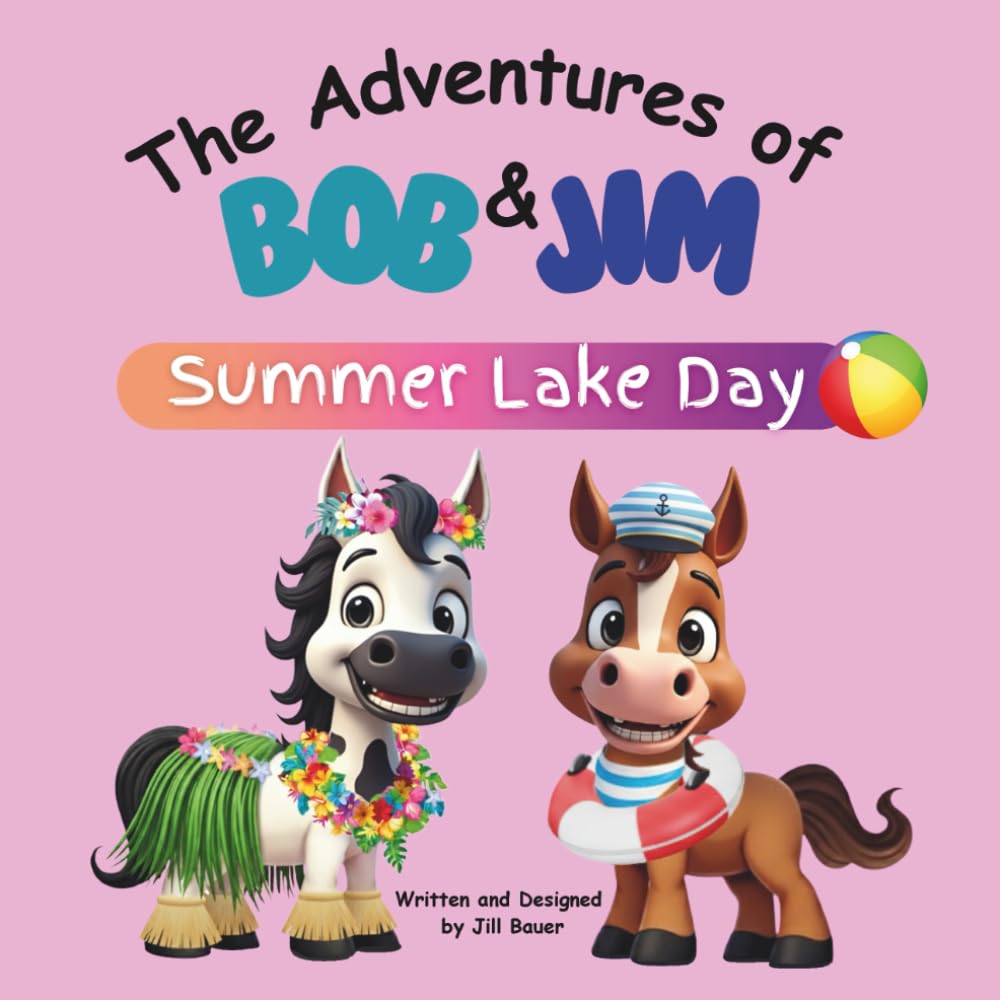
The Adventures of Bob & Jim: Summer Lake... |

Alaska Native People at Metini/Fort Ross... |
|
|---|---|---|---|---|
| Price | $13.99 | $11.59 | $11.99 | $6.65 |
| Brand | Emma Prince | Scott Hamrick | Jill Bauer | Alexandra Aluĝsnikax̂ & Dr. Lauren Peters |
| Merchant | Amazon | Amazon | Amazon | Amazon |
| Availability | In Stock | In Stock | In Stock | In Stock |