
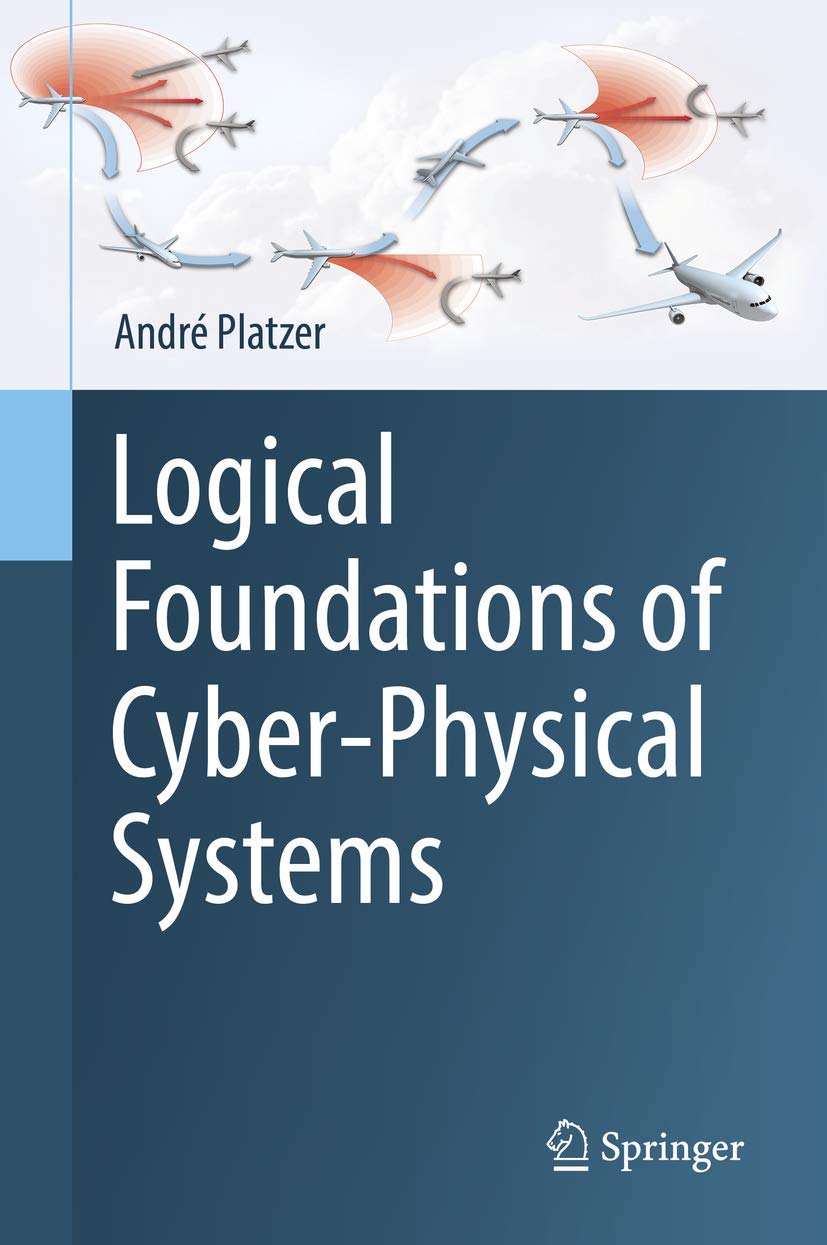
Logical Foundations of Cyber-Physical Systems
$27.59
| Brand | André Platzer |
| Merchant | Amazon |
| Category | Books |
| Availability | In Stock Scarce |
| SKU | 3319635875 |
| Age Group | ADULT |
| Condition | NEW |
| Gender | UNISEX |
| Google Product Category | Media > Books |
| Product Type | Books > Subjects > Computers & Technology > Computer Science > AI & Machine Learning > Intelligence & Semantics |
About this item
Logical Foundations of Cyber-Physical Systems
Cyber-physical systems (CPSs) combine cyber capabilities, such as computation or communication, with physical capabilities, such as motion or other physical processes. Cars, aircraft, and robots are prime examples, because they move physically in space in a way that is determined by discrete computerized control algorithms. Designing these algorithms is challenging due to their tight coupling with physical behavior, while it is vital that these algorithms be correct because we rely on them for safety-critical tasks. This textbook teaches undergraduate students the core principles behind CPSs. It shows them how to develop models and controls; identify safety specifications and critical properties; reason rigorously about CPS models; leverage multi-dynamical systems compositionality to tame CPS complexity; identify required control constraints; verify CPS models of appropriate scale in logic; and develop an intuition for operational effects. The book is supported with homework exercises, lecture videos, and slides. “This excellent textbook marries design and analysis of cyber-physical systems with a logical and computational way of thinking. The presentation is exemplary for finding the right balance between rigorous mathematical formalization and illustrative case studies rooted in practical problems in system design.” (Rajeev Alur, University of Pennsylvania) “[The author] has developed major important tools for the design and control of those cyber-physical systems that increasingly shape our lives. This book is a ‘must’ for computer scientists, engineers, and mathematicians designing cyber-physical systems.” (Anil Nerode, Cornell University) “The theory is brought to life through many didactic examples, illustrations, and exercises. A wealth of background material is provided in the text and in an appendix for each chapter, which makes the book self-contained and accessible to university students of all levels.” (Goran Frehse, Université Grenoble Alpes) “This book strikes a wonderful balance between rigorous foundations for this next era of computing with illustrative examples and applications that drive the developed methods and tools. A must read book for anyone interested in the development of a modern and computational system science for cyber-physical systems.” (George J. Pappas, University of Pennsylvania) "This definitive textbook on cyber-physical systems lays the formal foundations of their behavior in terms of a single logical framework. Platzer's logic stands out among all other approaches because it provides a uniform treatment of both the discrete and continuous nature of cyber-physical systems, and does not shy away from their complex behavior due to stochasticity, uncertainty, and adversarial agents in the environment. His computational thinking approach makes this work accessible to practicing engineers who need to specify and verify that cyber-physical systems are safe.” (Jeannette M. Wing, Columbia University) Cyber-physical systems (CPSs) combine cyber capabilities, such as computation or communication, with physical capabilities, such as motion or other physical processes. Cars, aircraft, and robots are prime examples, because they move physically in space in a way that is determined by discrete computerized control algorithms. Designing these algorithms is challenging due to their tight coupling with physical behavior, while it is vital that these algorithms be correct because we rely on them for safety-critical tasks. This textbook teaches undergraduate students the core principles behind CPSs. It shows them how to develop models and controls; identify safety specifications and critical properties; reason rigorously about CPS models; leverage multi-dynamical systems compositionality to tame CPS complexity; identify required control constraints; verify CPS models of appropriate scale in logic; and develop an intuition for operational effects. The book is supported with homework exercises, lecture videos, and slides. André Platzer is an Associate Professor in the Computer Science Department at Carnegie Mellon University. He develops the logical foundations of cyberphysical systems to characterize their fundamental principles and to determine how we can trust computers to control physical processes. He has a Ph.D. from the University of Oldenburg, Germany. He received an ACM Doctoral Dissertation Honorable Mention and NSF Career Award, and he was named one of the Brilliant 10 Young Scientists by the Popular Science magazine and one of AI's 10 to Watch by the IEEE Intelligent Systems Magazine.
| Brand | André Platzer |
| Merchant | Amazon |
| Category | Books |
| Availability | In Stock Scarce |
| SKU | 3319635875 |
| Age Group | ADULT |
| Condition | NEW |
| Gender | UNISEX |
| Google Product Category | Media > Books |
| Product Type | Books > Subjects > Computers & Technology > Computer Science > AI & Machine Learning > Intelligence & Semantics |
Similar Products










Compare with similar items

Weber's Smoke CookBook... |

Reading Butterfly,'Mexican Artisan Paint... |

Big Book of Dot Marker Fun: Third 100 Si... |
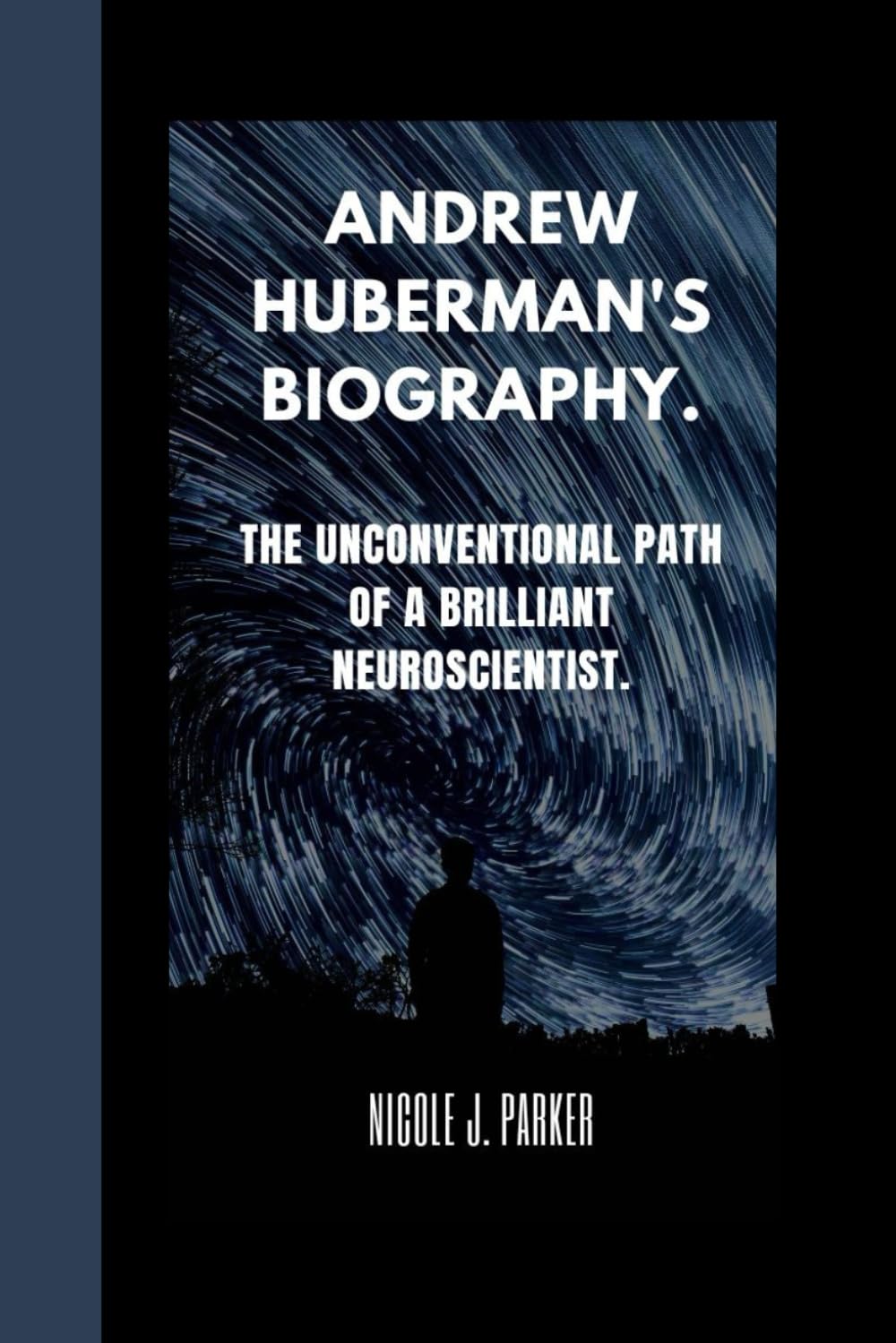
Andrew Huberman's Biography.: The Unconv... |
|
|---|---|---|---|---|
| Price | $24.95 | $14.39 | $11.99 | $18.99 |
| Brand | Weber | NOVICA | Lauren Haugan | Nicole J. Parker |
| Merchant | sportsmanswarehouse | NOVICA.com | Amazon | Amazon |
| Availability | In Stock | In Stock | In Stock | In Stock |